

Landscaping that works: timing, budget tips, and hardscape ideas for Fall
A smart fall landscape plan does two things at once. It refreshes curb appeal before winter, and it sets up spring with beds, walls, and paths that are already dialed in. In Indiana, Kentucky, and Tennessee, you can plant and build through fall with fewer heat waves, softer soils, and more predictable schedules.
This guide gives you a practical fall playbook. You will learn the five core design elements and how to apply them with real, buildable hardscapes. You will also find timing guidance for IN/KY/TN, common pitfalls to avoid, budget savers, and when to DIY versus hire a pro.
The best timing for fall projects in IN, KY, and TN
- Planting and lawn work: Early fall through mid fall is ideal. Cooler air and warm soils reduce stress so roots establish before frost. Trees, shrubs, perennials, and cool-season turf typically do well.
- Hardscape installs: Late summer through fall is prime time for patios, steps, walkways, and retaining walls. Crews can excavate and compact properly without midsummer storm chaos, and materials often arrive more predictably. Always confirm local stock, color options, and lead times with your nearest showroom.
Tip: If you plan a spring patio, get the base and walls done in fall. You will be ready for surface work as soon as the ground thaws.
The five elements of landscaping, applied
Great landscapes use five design elements. Here is how to make them tangible with Lee Building Products.
- Line: Direct movement and define edges. Use soldier-course borders along patios and walks to guide the eye and keep fields tight. Paver edging and clean walkway lines make spaces read larger and safer.
- Form: Shape outdoor rooms and elevation changes. Retaining walls create terraces for flat lawns or garden beds on slopes. Seat walls and short pillar accents frame patios and set natural gathering zones.
- Color: Tie the house to the site. Choose paver and wall tones that complement brick or siding. When budgets are tight, pick readily available local colors to shorten lead times and reduce freight.
- Texture: Add depth and contrast. Rosetta Dimensional Flagstone brings a natural texture with a flat, foot-friendly surface; clay brick pavers add crisp edges and classic character. Pair smooth paver fields with a textured seat wall for balance.
- Scale: Match unit sizes to the space. Larger slabs calm a broad patio, while smaller-format Holland pavers fit narrow paths and tight courtyards. Steps in 4-foot runs fit garden side paths; 6-foot steps suit primary entries and pool approaches.
Product ideas that put the elements to work:
- Define edges with concrete paver borders, then use Rosetta Dimensional Flagstone or Southern Traditions Holland in the main field.
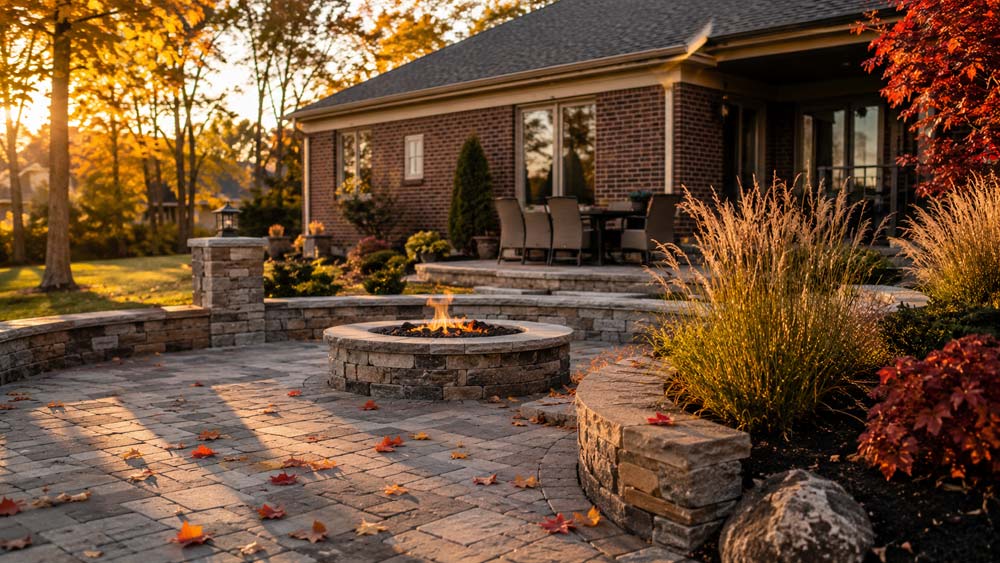
- Create focal points with Rosetta Steps or a low Belvedere or Kodah seat wall beside a fire pit.
- Manage grades with retaining wall systems suited to your slope and soil. Taller walls or walls with surcharges may require geogrid and engineer approval per IBC.
Buildable fall hardscape upgrades
- Walks and entries: Running bond or herringbone pavers, framed with a contrasting soldier course for interlock and a crisp finish. Add Lumien accent lights for safety on steps and bends.
- Patios and pool edges: Porcelain-faced GeoCeramica slabs offer slip resistance, stain resistance, and consistent joint spacing for cleaner lines and faster installs. Coordinate coping for steps and wall caps.
- Steps and transitions: Rosetta Dimensional Steps target a comfortable rise and read as natural stone without fussy shimming.
- Retaining walls and terraces: Choose a wall system based on height, soil, and loads. Short garden walls may work as gravity systems; taller slopes, driveways above walls, or poor soils often need engineered reinforcement.
Drainage and base: avoid these common pitfalls
- No drainage plan: Hardscapes need pitch, drain inlets, or permeable assemblies. For infiltration, Rosetta Old Mission pairs with an open-graded base. For tight-joint installs, shed water to drains or green space.
- Wrong base depths: Undersized or poorly compacted base stone leads to settling and edge creep. Excavate to required depths, compact subgrade in lifts, place graded aggregate, and screed a consistent bedding layer.
- Skipping fabric where needed: In many soils, a geotextile between subgrade and base helps separate fines and protects structure. Follow system guidance and local best practices. No edge restraint: Paths and patios without secure edges migrate and open joints. Use compatible edge restraints set on solid base.
- Ignoring code thresholds: Retaining walls above local IBC thresholds typically require engineer approval and geogrid. Do not guess on reinforcement.
Budget savers that do not sacrifice quality
- Phase the work: Build the base, walls, and steps now, then set the paver field in spring.
- Choose in-stock, regional colors: Readily available blends reduce lead times and freight.
- Right-size formats: Smaller-format pavers can manage cuts and waste efficiently on tight layouts; larger slabs can reduce labor on broad patios.
- Design for simple cuts: Straight runs, modular patterns, and clear borders reduce time on site.
- Confirm availability early: Lock in timelines and delivery windows before schedules tighten.
DIY or hire a pro
DIY is reasonable for small patios, garden paths, edging, and low seat walls on stable soils if you are comfortable with excavation, compaction, and safety. Hire a professional for:
- Retaining walls beyond garden height, or any wall near structures, slopes, or driveways Driveways and heavy-use surfaces that need engineered bases and tight interlock
- Complex drainage, permeable systems, gas or electrical features, and lighting plans
- Projects that require permitting or IBC-compliant wall reinforcement
If you are researching local pros and materials, compare options for Indianapolis and Nashville projects, then visit a showroom to review color boards and lead times:
- Explore Indianapolis residential landscaping resources to plan patios, walls, and outdoor living, and confirm stock and scheduling.
- See lighting options and after-dusk displays for Louisville projects, including fixture placement around steps and borders.
- Review retaining wall solutions, from garden walls to engineered systems, for Nashville-area grades and soils.
- Compare natural stone options for accents, steps, and walls when you want authentic texture.
Quick fall checklist
- Walk the site after a rain to note drainage paths.
- Sketch zones, edges, and step locations with rough dimensions.
- Select a paver field and a contrasting border for line and texture.
- Match wall tones to the house for a cohesive color story.
- Confirm local availability, color blends, and delivery timing at a showroom.
FAQ
- What is the best time of year for landscaping? In IN/KY/TN, early to mid fall is ideal for planting. Hardscapes install well from late summer into fall when soils are workable and schedules are steadier.
- What are common landscaping mistakes? Missing drainage plans, underbuilt bases, skipping geotextile where needed, forgetting edge restraints, and ignoring code thresholds for retaining walls.
- What are the 5 basic elements of landscaping? Line, form, color, texture, and scale. Use borders for line, walls and steps for form, in-stock regional blends for color, mixed paver and wall finishes for texture, and right-size units for scale.
- How do you save money on landscaping? Phase installs, choose readily available local colors, design for fewer cuts, and confirm availability early to avoid delays.
- What services do most landscaping companies offer? Site assessment and design, grading and drainage, patios and walks, steps and retaining walls, planting and turf, lighting, fire features, and maintenance. Many also handle permits and coordinate engineered wall designs when required.
Wrap-up
Fall rewards smart planners. If you align the five elements with buildable hardscapes, manage drainage and base correctly, and phase work where it makes sense, you set up a durable landscape that looks good now and performs next Spring. Visit your nearest Lee Building Products showroom to compare textures and color boards in person, review Rosetta steps and wall options, and confirm availability and lead times for your timeline. Bring a simple sketch and measurements, and the team can help you move from plan to materials with confidence.
