

Patio cost showdown: pavers vs concrete (and what you’ll really spend over time)
The best patio is the one that fits the budget, looks the way you want, and stays that way without constant fixes. Concrete and pavers both check some of those boxes, but they diverge once you look past day-one pricing.
This guide compares initial and lifetime costs for five common options concrete slab, stamped concrete, clay brick pavers (Pine Hall), wet-cast concrete pavers (Southern Traditions, Rosetta), and porcelain-faced GeoCeramica. It also covers labor and base prep, sealing and color fade, repairs, and slip resistance around pools. At the end, you will find example cost scenarios for 12×12 and 20×20 patios with clear caveats so you can plan with confidence.
For specific materials, regional availability, and quotes, contact your nearest Lee Building Products showroom in Indiana, Kentucky, or Tennessee. Seeing full-size samples and finishes in person makes a real difference.
What drives patio cost
Material price is only part of the picture. Expect the final number to include:
- Base preparation: Excavation, compaction, and aggregate base thickness suited to soil and drainage.
- Edging and restraints: Needed to lock pavers in place and protect slab edges.
- Labor and equipment: Crew size, access to the yard, and cutting complexity.
- Site conditions: Drainage fixes, steps, or tie-ins to doors and walks.
Concrete is usually faster to place in open, accessible yards. Pavers often take longer to set, pattern, and cut around details, but they offer easier repair options later.
Initial cost comparison (typical tendencies)
Final pricing varies by market, access, and selection. Use these ranges as directional guidance, then get a local quote.
- Plain concrete slab: Typically the lowest upfront cost per square foot. Add for thicker slabs, reinforcement, or complex formwork.
- Stamped concrete: Higher initial cost than plain concrete due to coloring, stamping, and sealing.
- Southern Traditions wet-cast concrete pavers: Competitive value for a classic patio look and strong everyday durability.
- Pine Hall clay brick pavers: Often mid-to-higher initial cost than basic concrete pavers; valued for color permanence and traditional style.
- Rosetta and other premium wet-cast pavers: Higher initial cost driven by larger formats, textures, and patterns.
- GeoCeramica porcelain-faced pavers: Often priced with premium pavers. The porcelain face provides slip resistance, stain resistance, and low maintenance, which can reduce lifetime care.
Lifetime costs, repairs, and color
- Repairs: Pavers win on spot-repair. If a section settles or a utility repair is needed, individual units can be lifted, base corrected, and pieces reinstalled. Concrete typically requires cutting and patching, which rarely blends perfectly.
- Color and fade: Clay brick pavers are fired clay and hold color well over time. Quality wet-cast concrete pavers use integral pigments and surface treatments but can show gradual change in high UV exposure. Stamped concrete color is topical or integrally colored plus antiquing; resealing is typically needed to keep color depth. Porcelain-faced GeoCeramica resists fading and staining, and color stays consistent.
- Sealing and care: Stamped concrete is usually sealed on install and resealed periodically to maintain appearance and reduce staining. Many homeowners choose to seal concrete pavers for color enhancement and stain resistance, but it is optional. Porcelain-faced GeoCeramica does not require sealing for performance and cleans easily.
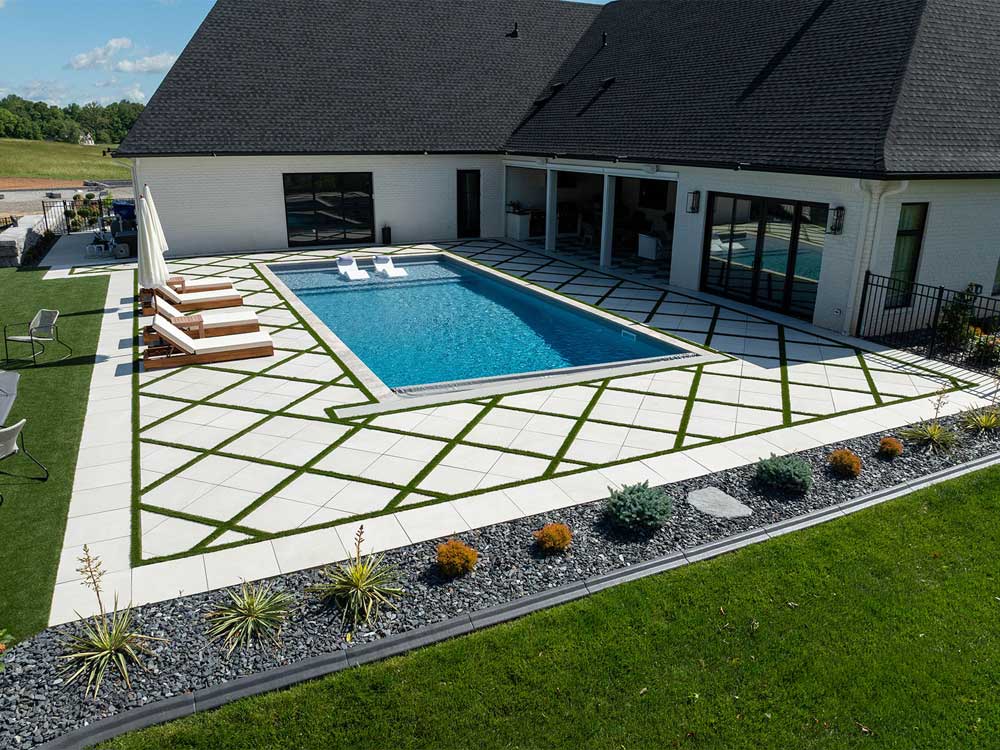
- Slip resistance and pools: Broom-finished concrete is grippy when clean. Smooth stamped finishes can be slick when wet unless a non-slip additive is used. Concrete pavers offer textured finishes and joint lines that aid traction. GeoCeramica’s porcelain face is engineered for improved slip resistance and stays comfortable underfoot, making it a strong pool-deck candidate.
Durability and what typically lasts longer
Both systems can last for decades with proper base preparation. In practice, pavers often outlast stamped concrete in appearance because joints and unitized construction manage small movements and make repairs straightforward. Concrete slabs that crack or spall can be costly to correct and difficult to blend.
DIY vs professional installation
DIY can work for small, simple patios. Consider a pro when:
- Access is tight or grades must be adjusted for drainage.
- Soil is clay-heavy or holds water and needs a thicker, well-compacted base.
- The design includes curves, steps, a pool edge, or multiple elevations.
Professional installers bring compaction equipment, edge restraint practices, and drainage know-how that protect your investment.
If you plan to hire, ask your local branch for reputable hardscape contractors in your area. For example, homeowners researching patio pavers in Indianapolis can start with our Indianapolis page for product guidance and to request referrals.
- See options and request guidance for patio pavers in Indianapolis: https://www.leebp.com/indianapolis-pavers
- Explore concrete pavers and collections for Nashville-region projects: https://www.leebp.com/pavers-landing-page/
Mistakes to avoid: a quick checklist
- Build on a compacted base, not soil: Excavate organic material, place graded aggregate, compact in lifts, and add a leveling layer.
- Install edge restraints: Use proper edge restraint to prevent lateral creep in paver fields.
- Pitch water away: Maintain consistent slope and plan downspout routes. Consider permeable systems such as Rosetta Old Mission where infiltration is desired and soils allow it.
- Control joints for concrete: Place joints at correct spacing and depth if pouring a slab.
- Manage cuts and borders: Plan borders to minimize small slivers and lock the field.
- Verify materials and quantities: Confirm color, pattern, and delivery details with your local branch before crews arrive.
Example cost scenarios with disclaimers
These illustrations are not quotes. They exclude taxes, permit fees, complex site work, and regional labor variability. Always confirm with a local showroom and installer.
Patio sizes:
- 12×12 feet, about 144 square feet
- 20×20 feet, about 400 square feet
Typical tendencies:
- Plain concrete slab: Lowest initial cost; add for thicker slab, reinforcement, or access challenges.
- Stamped concrete: Mid-range to higher than plain slab due to color, pattern, and sealing.
- Southern Traditions concrete pavers: Competitive installed cost for value-focused projects.
- Pine Hall clay brick pavers: Mid-to-premium depending on pattern and border complexity.
- Rosetta premium wet-cast pavers: Premium look and larger formats; higher range.
- GeoCeramica porcelain-faced pavers: Premium but low maintenance; especially compelling for pool areas.
How much would a 20×20 paver patio cost? In many projects across our region, a straightforward 20×20 installed with value-focused concrete pavers such as Southern Traditions typically lands in a mid-range paver budget, with upgrades for complex borders, curves, or heavy cutting. Clay brick pavers or large-format premium systems will trend higher. Because access, base depth, and labor vary widely, get a site-specific quote from your nearest showroom.
Product tie-ins by goal
- Best value: Southern Traditions pavers deliver classic profiles at competitive budgets. Patterns such as herringbone improve interlock for long-term performance.
- Design flexibility: Techo-Bloc collections provide coordinated sizes, textures, and colors for creative layouts, modern borders, and pool surrounds.
- Lowest maintenance: GeoCeramica’s porcelain face resists fading and staining and improves slip resistance around patios and pools. Built-in spacers help speed installation and keep joint lines consistent.
FAQ
- Is it cheaper to lay concrete or pavers? Plain concrete typically costs less upfront than a paver system. Over time, pavers can reduce repair costs because individual units are replaceable and movement is managed at the joints.
- What lasts longer, pavers or stamped concrete? Both can last, but pavers often maintain appearance longer. Unitized construction allows small movements without visible cracking, and repairs blend in. Stamped concrete relies on the slab; cracks and color wear can be harder to correct.
- How much would a 20×20 paver patio cost? A 400 square foot paver patio varies with product choice, base depth, access, and pattern complexity. Value-focused wet-cast options such as Southern Traditions typically sit in the mid-range for pavers, with clay brick and large-format premium systems higher. Request a site visit for accurate pricing.
- What is the cheapest and easiest way to build a patio? A plain concrete slab is usually the least expensive and fastest to install in open sites. For DIY, a small-square paver kit on a properly compacted base is manageable, but avoid skimping on base or edge restraint.
- What are common paver patio problems? Most issues trace back to base and drainage. Common problems include settling due to poor compaction, edge creep without restraints, washout from downspouts, and hazing from unwashed polymeric sand. All are preventable with correct prep and follow-through.
Next step
Every yard and soil profile is different. Visit your nearest Lee Building Products showroom to compare surfaces in person, check local inventory, and request quotes from trusted installers. If you are planning a Nashville-area project and want material availability and contractor referrals, start with our concrete pavers page for the region: https://www.leebp.com/pavers-landing-page/. For Indianapolis homeowners weighing stamped concrete alongside paver options, explore local selections and request guidance here: https://www.leebp.com/indianapolis-pavers.
Summary: Concrete slabs usually win on day-one price. Pavers often win on appearance, repairs, and long-term ownership, especially around pools where slip resistance, color stability, and cleanability matter. Choose the system that fits the site, the budget, and how you plan to use the space, then build it on a solid base so it performs for years.
