


Designing steps and entries that meet code and look great
Holiday guests test every approach to your home. Good step design keeps traffic moving, prevents slips, and frames the entry so it looks intentional from the curb and up close.
This guide walks through practical planning for Rosetta Dimensional and Irregular Steps, how to hit a comfortable rise, when to pick 4-foot vs. 6-foot lengths, and how to finish edges so nosings read clearly in all light. You will also find notes on coordinating with Pine Hall clay brick or GeoCeramica slabs, flagstone thickness and base prep, cold-weather timing, staging, and pallet counts.
Bring rough measurements to your nearest showroom for a fast, accurate quote before schedules tighten.
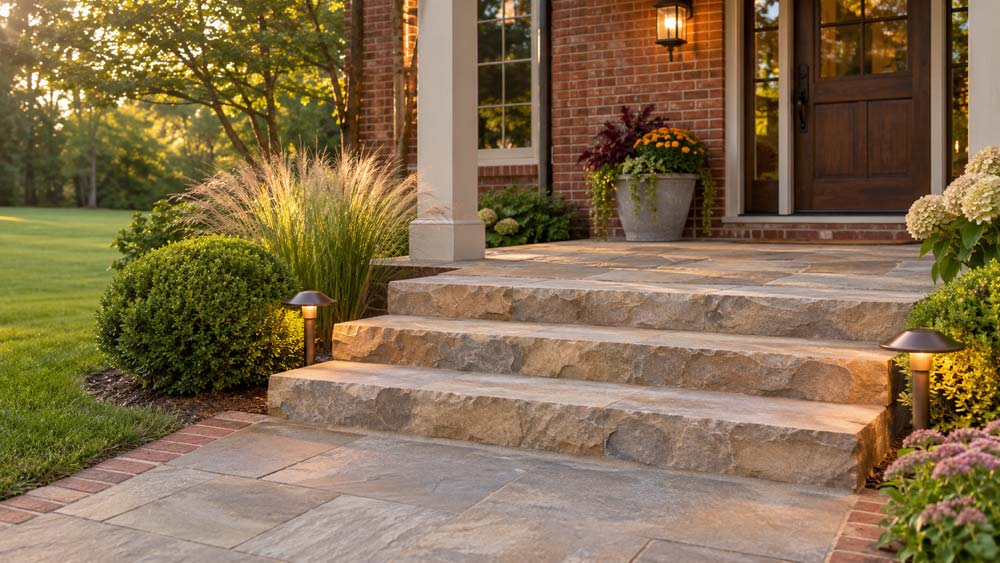
Start with rise, run, and a clean approach
Target a 7-inch rise per step. This typically aligns with code guidance and natural walking rhythm. Keep rises within a small tolerance from the first tread to the last so footwork stays predictable at night and in wet or icy weather.
- For primary entries and walkouts, plan a broad landing that allows the door to swing freely with safe clearance.
- Pitch treads slightly forward for drainage, and direct surface water away from thresholds and the house.
Rosetta Dimensional Steps are cast for consistent rises and clean alignment. Rosetta Irregular Steps deliver a natural look with blended pieces that suit curved approaches and organic plantings.
Choose 4-foot vs. 6-foot step lengths
Match the step length to the approach:
- 4-foot units fit narrow garden paths and tight side entries where space is limited.
- 6-foot units suit front doors, pool approaches, and main patio transitions, offering easier passing and a generous feel.
When in doubt, step up one size for primary entries. Wider approaches reduce edge crowding, improve safety on busy days, and look more intentional from the street.
Make nosings visible and safe
Clear nosing definition helps every guest place a foot with confidence.
- Use a contrasting soldier-course border along the step edge to frame the nosing.
- Choose a tone that stands out against the tread field without clashing.
- Add accent lighting to wash risers and highlight edges at dusk.
If you are building a clay brick entry, Pine Hall clay brick pavers offer timeless color with excellent slip resistance and work well with a soldier-course frame. For modern, low-maintenance entries that stay cooler and resist stains, coordinate steps with GeoCeramica slabs. Compare full-size samples in showroom light, then confirm availability before you schedule crews.
For local planning inspiration and product options, see our pages for Indianapolis projects and contractors:
- Explore ideas and materials for Indianapolis residential landscaping at leebp.com/indianapolis-landscaping.
- Find a masonry contractor in Indianapolis through our regional overview at leebp.com/indianapolis-masonry-contractors.
Coordinate materials for a cohesive entry
Tie steps, landings, and adjacent walkways together:
- Rosetta Dimensional Steps pair naturally with running bond or herringbone fields for crisp lines.
- Rosetta Irregular Steps connect well with natural flagstone fields and curved beds.
- Soldier-course borders strengthen edges and visually organize the layout.
When blending with clay brick, keep bond patterns consistent across landings and walks. With GeoCeramica slabs, maintain straight, even joints and carry a consistent joint width through to the landing for a clean read.
If you are sourcing brick or stone in Middle Tennessee, compare options from Nashville brick suppliers on our regional stone and brick offering page at www.leebp.com/stone-brick-offering-nashville-tn/.
Cold-weather timing and install notes
Freeze-thaw cycles magnify small mistakes. Plan these basics:
- Base preparation: Excavate to stable subgrade, compact in lifts, and set a graded stone base to manufacturer guidance. Keep bedding layers even.
- Drainage: Pitch treads, landings, and adjacent surfaces away from structures; add drains where needed.
- Adhesives and mortars: Follow cold-weather guidelines for cure times and temperatures.
- Lighting: Place fixtures to reduce glare and highlight risers for safe evening use.
In colder months, stage materials close to the work area on stable ground so handling stays efficient and safe. Confirm pallet counts early for both Rosetta Dimensional and Irregular Steps; verify piece mix, caps, and any border units before you begin.
Staging, access, and pallet counts
Heavy units demand a safe plan:
- Confirm delivery routes and placement in advance so pallets land where equipment can reach them.
- Keep traffic lanes open and stable, and use team lifts or mechanical assistance for placement.
- Review handling clearances, landing sizes, and the number of courses required before day one.
If you are planning an entry refresh alongside garden paths, compare stepping stones sized to your layout. For a quick look at natural stone options in Middle Tennessee, visit leebp.com/natural-stone.
Working with clay brick and GeoCeramica
Clay brick entries deliver classic curb appeal and grip in all seasons. Pine Hall clay brick pavers hold baked-in color that stays consistent. Running bond reads clean at front walks; herringbone adds strength for higher traffic.
GeoCeramica slabs combine a porcelain surface with a concrete base for a modern, low-maintenance landing. They resist stains and heat, and an integrated spacer helps maintain consistent joints during install. Avoid harsh acids and abrasive pads; clean with a mild pH-neutral cleaner and a soft brush.
FAQ
- How thick should flagstone be for a walkway? For pedestrian walkways on a proper base, flagstone typically ranges from about 1.5 to 2 inches thick. In freeze-thaw climates or on less stable bases, thicker pieces improve durability.
- What do you put under flagstones? Use a well-compacted, graded stone base topped with a consistent bedding layer. For dry-laid walks, an angular stone base with screenings or coarse sand as the setting bed is common. For mortared work, set over a suitable concrete base with proper drainage and follow mortar and movement-joint best practices.
- What are common masonry mistakes to avoid? Skipping compaction in lifts, inconsistent rises across steps, poor drainage at landings, missing or weak edge restraint, inadequate joint stabilization where required, and failing to confirm pallet counts and piece mixes before install.
- What are the 5 basic elements of landscaping? While frameworks vary, a practical lens is line, form, texture, color, and scale. Use these to guide path alignment, step massing, plant selection, and hardscape finishes so the entry reads as one composition.
Quick checklist before holiday traffic
- Keep step rises near 7 inches and consistent.
- Pick 4-foot steps for tight paths, 6-foot for primary entries.
- Frame nosings with a contrasting soldier course and add lighting.
- Coordinate Rosetta steps with Pine Hall clay brick or GeoCeramica slabs for a unified look.
- Plan cold-weather adhesives, drainage, and cleaning methods.
- Confirm pallet counts, piece mix, caps, and delivery staging.
- Bring rough measurements for a fast quote and scheduling.
Summary and next step
A safe, attractive entry starts with consistent 7-inch rises, the right step length for your approach, and edges that read clearly day and night. Coordinate Rosetta Dimensional or Irregular Steps with Pine Hall clay brick or GeoCeramica slabs, frame nosings with a soldier course, and lock in pallet counts before holiday timelines tighten. Bring rough measurements to your nearest showroom, and we will help you compare full-size samples and turn around a fast, accurate material quote.
